Oct 27, 2026Buying Guides
Intarsia vs Jacquard: Knitting Patterns Into Fabric
Learn how intarsia and jacquard knitwear are built. Compare yarn paths, back floats, fabric weight, and production trade-offs for custom knitwear collections.

A brand hands its factory a graphic brief and hears two unfamiliar words back: intarsia or jacquard. When a design is meant to be knitted into the fabric rather than applied to it, that choice is the first technical fork in the road. Surface printing, seen on select printed tops in our live collection, is one path; knitting the pattern in makes the graphic and the fabric one structure, so the pattern ages with the knit rather than as a layer on top. The same knit-in logic is how logos are knitted directly into fabric. Choosing between intarsia and jacquard shapes garment weight, drape, reverse texture, and production economics.
1. Knitting a Pattern In vs Putting It On Top
Knitting artwork directly into a sweater means the visual design forms the structural fabric grid. Stitches creating the graphic are identical to those holding the garment together. This construction gives knit-in pieces a natural hand feel without topical ink layers, allowing the knit to breathe and stretch with body movement.
Flat knitting machines draw yarn into loops across needle beds. When multiple colors appear in a course, the machine routes each strand through needle selections; intarsia and jacquard are the two primary methods for managing those strands, each on distinct mechanical principles.
2. Intarsia: Blocks of Color, No Floats
Intarsia supplies each distinct color zone with its own yarn feed. As knitting progresses, the working yarn disengages at color boundaries and the next color begins; adjacent loops interlock where blocks meet, securing the panel without open vertical slits.
Because inactive yarn never carries across dormant sections, intarsia leaves no reverse floats; the interior stays flat and clean at true single jersey thickness. This construction keeps garment weight light and drape fluid, making intarsia ideal for placement artwork, color-blocked panels, and large asymmetrical graphics.

3. Jacquard: Floats, Loops, and Layered Structure
Jacquard carries all active colors across the full width of the pattern field. Needles select colors to form face loops while idle strands float along the reverse until their next stitch.
Long reverse floats define single jacquard; when graphic elements sit far apart, they introduce snagging risks during dressing. Technicians limit these hazards by programming tuck stitches to catch loose strands, or by switching to double jacquard. In double jacquard, needles on front and rear beds work together to knit backing yarn into a closed reverse face. The result is a denser, multi-layered fabric with warmth and stability, excelling in repeating fair isle motifs and fine allover patterns.
4. The Cost and Planning Differences
Evaluating production economics requires analyzing yarn consumption alongside machine time. Neither route wins on price; cost depends on pattern layout and material behavior.
Intarsia production time: Intarsia requires multiple yarn carriers traversing the needle bed in sequence; as color blocks multiply, speeds slow to coordinate feeder handoffs. Each transition leaves yarn ends that partner workshop operators secure by hand during finishing.
Jacquard yarn consumption: Jacquard machines run at consistent knitting speeds, but material consumption climbs because unused yarns carry across the panel. If a plain jersey style weighs 300 grams, executing that same silhouette in a two-color jacquard can raise total garment weight to 450 grams, directly increasing raw yarn expense.
Order size and sampling rounds: Intarsia's per-garment hand finishing weighs heaviest on small runs, while jacquard's machine efficiency grows as a repeat gets larger. Each route also sets what sampling must prove — block alignment and clean color joins versus repeat alignment and reverse floats — which can add a proofing round when either misses.
Artwork and sampling setup: Intarsia artwork needs clean boundaries suited to carrier limits; jacquard patterns need strict grid alignment so repeats scale evenly across panels. Both require tension swatch testing to verify yarn shrinkage and edge stability.
5. Matching the Technique to the Design
Matching the design concept to the knitting method balances fabric performance and predictable cost targets:
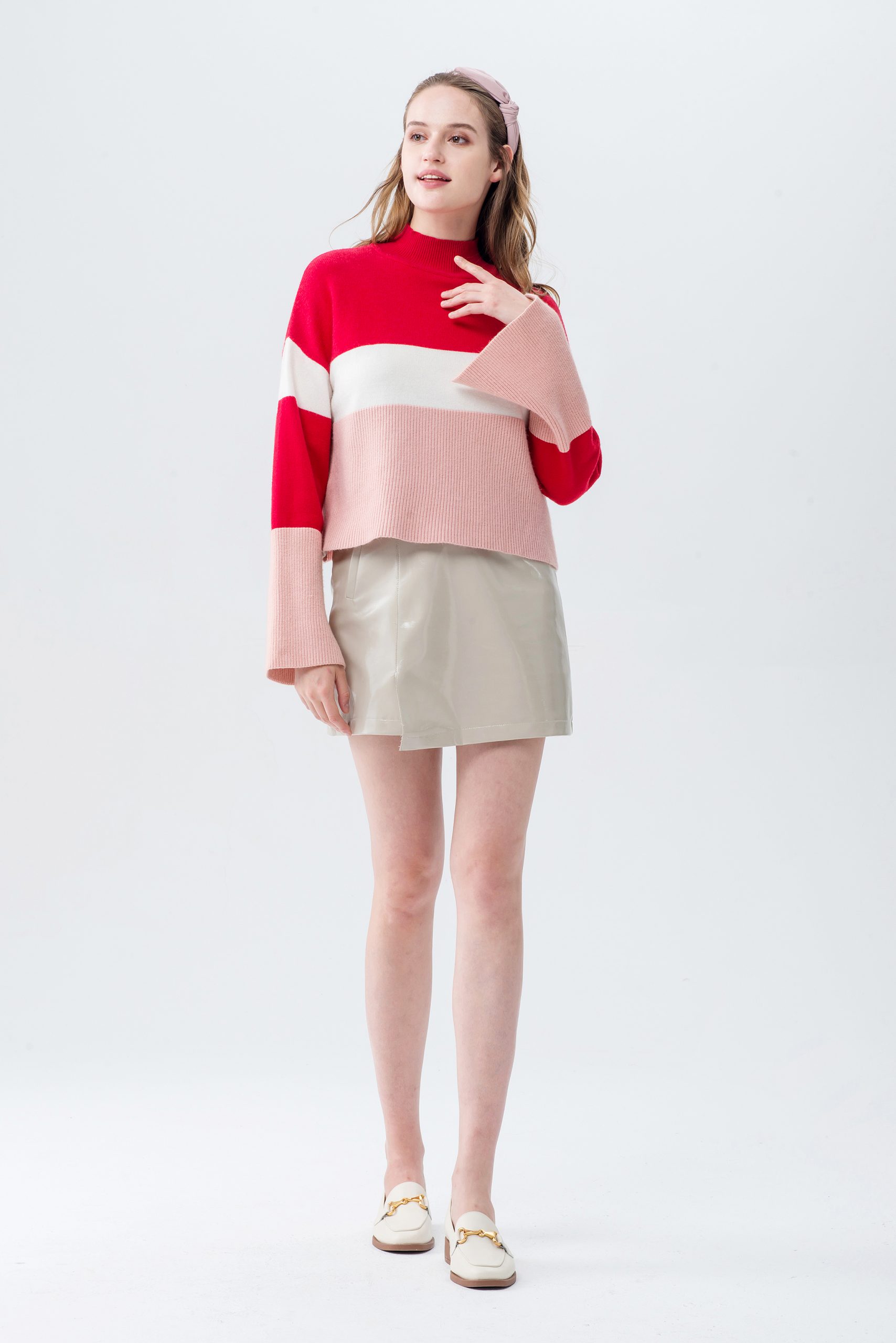
Bold placement graphics: Select intarsia for large color blocks, single chest graphics, or abstract shapes needing single-layer softness and light weight.
Complex repeating motifs: Select jacquard for allover houndstooth, fair isle, or micro-patterns where continuous mechanical knitting holds consistent tension.
Structured winter layers: Select double jacquard when styles demand substantial thickness, cold-weather insulation, and clean interior surfaces without exposed yarn loops.
Based in Guangzhou and founded in 2018, Imorna supports European and North American fashion brands with complete OEM and ODM knitwear manufacturing. Our partner workshops run 3GG, 7GG, 12GG, and 14GG flat knitting machines suited to both fluid intarsia panels and layered jacquard structures. With a 50-piece-per-color-per-style minimum and sample delivery in 5-7 days, brands can evaluate color swatches and reverse finishing before bulk runs. Contact our team to review your tech pack and request a confidential quote.