Oct 28, 2026Buying Guides
Knitwear Ribbing: Cuffs and Hems That Hold Their Shape
Learn how knitwear ribbing engineering keeps cuffs and hems in shape. Explore 1x1 versus 2x2 ribs, tension transitions, elastic yarns, and sampling checks.

Few issues frustrate knitwear developers more than a sweater hem that curls outward or sleeve cuffs that sag after a few hours of wear. Product teams often spot this flaw on initial prototypes, watching clean lines turn into wavy bottom borders and limp openings. When a hem flares or cuffs lose grip, teams often blame yarn choice. In production, trim stability rarely depends on fiber alone. Cuffs and hems hold their line when rib architecture, stitch tension, and body transitions are engineered together to balance stretch with reliable recovery.
1. Why Rib Is the Workhorse of Trims
Plain jersey knitting rolls along open edges because face and reverse loops carry opposing tensions. While jersey stretches horizontally, it lacks the internal structure to snap back into place. Rib trims resolve this by alternating knit and purl stitches on opposing needle beds, forming vertical ridges that compress inward like an accordion and pull the trim narrower than the sweater body.
That contraction makes ribbing the foundation for sweater hems and cuffs. A balanced hem keeps a pullover resting smoothly against the hips without riding up or flaring. At the wrist, ribbed cuffs hug the arm to block cool air and keep pushed-up sleeves in place. While the same mechanical principle applies to necklines, cuffs and hems absorb far heavier friction and movement during daily wear.
2. Rib Types and What They Change
Selecting a rib type defines both the visual proportion and the elastic grip of finished edges.
1x1 rib for subtle texture and balanced recovery: Alternating single knit and purl columns produces a fine, symmetrical vertical grain. With stitch wales sitting tightly together, 1x1 ribbing delivers moderate stretch and a clean look suited to fine-gauge sweaters.
2x2 rib for bold ridges and wider stretch: Pairing two knit stitches with two purl stitches creates pronounced ribs with deeper valleys. This layout offers greater expansion and firmer snapback, making 2x2 ribbing well suited to relaxed pullovers and textured knits.
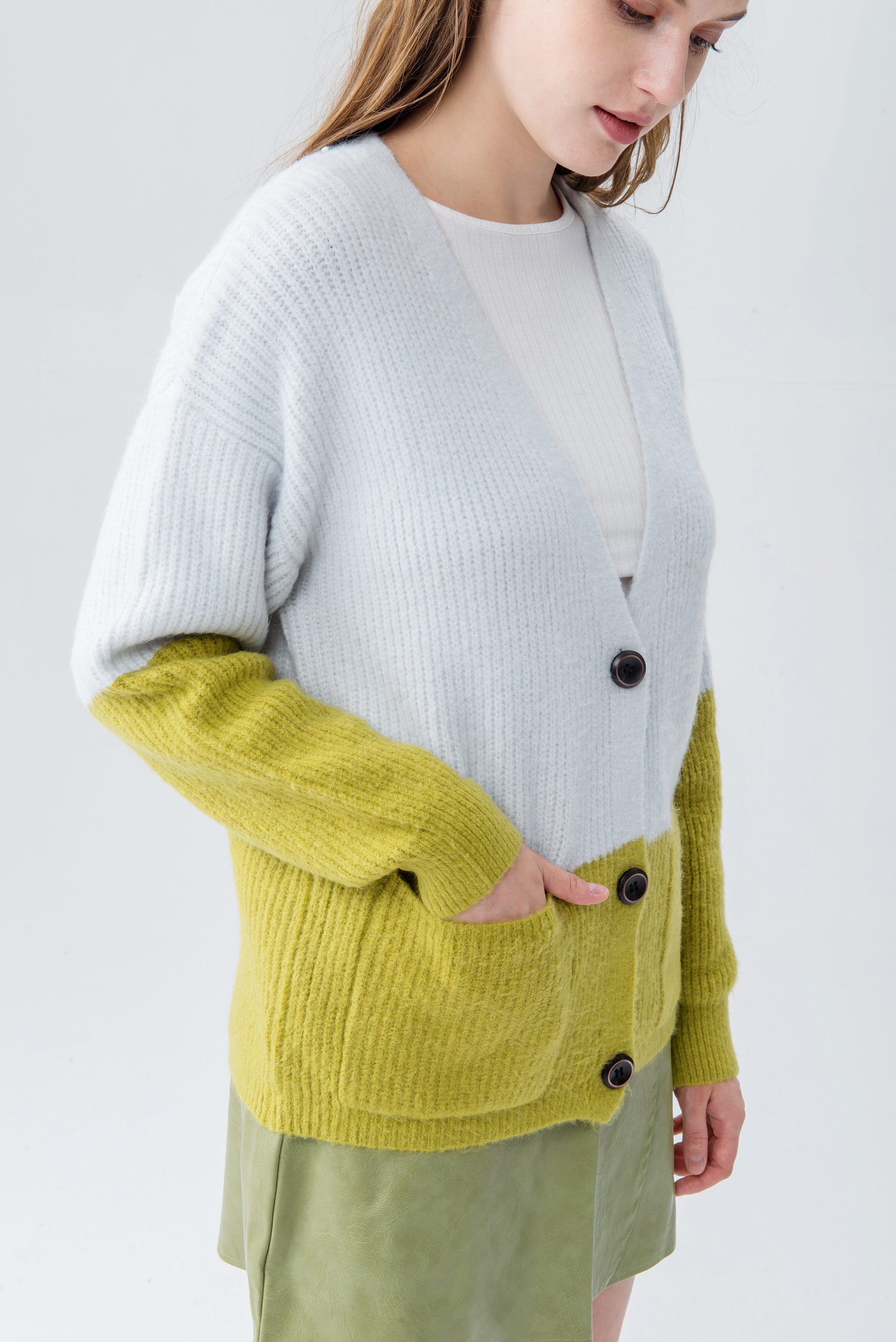
Trim height also matters. A narrow hem easily flips upward, while an overly deep band shifts the waistline. Technical teams balance rib style and height to match the intended garment drape.
3. The Transition from Rib to Body
The boundary where a ribbed trim joins the body is a critical transition zone. Because rib structures contract naturally, knitting a trim with the same stitch count and density as a plain jersey body causes puckering along the join.
To achieve a flat progression, the mill balances stitch tension and needle allocations across transition courses. On flat knitting machines, the rib is knitted under tighter tension than the body. This density difference gives cuffs and hems a firm grip without forming an awkward bulge where body knitting begins.
When styles use assembled panels, dial linking joins each trim loop cleanly to its matching body stitch. Uneven linking or mismatched loop ratios produce wavy edges or rigid seams that snap during dressing.
4. Elastic Yarns and Recovery
Natural fibers like wool and cotton provide spring through fiber crimp, yet repeated stretching gradually tires their recovery. When silhouettes demand lasting shape retention, the trim carries a fine elastic yarn.
Plating elastane into edge courses: Rather than blending synthetic filaments across the entire garment, fine elastane is plated directly into hem and cuff ribbing. Feeding elastane alongside the primary yarn keeps the elastic hidden inside the rib structure, providing resilient snapback while preserving the soft hand-feel of the main yarn.
Evaluating elasticity through laundering: Excessive elastic tension creates overly tight cuffs, while insufficient tension allows edges to flare after washing. High water temperatures also weaken elastic fibers over time. Recovery is therefore evaluated through wash testing rather than assuming elastic components retain grip indefinitely.

5. Specifying and Verifying Trims
Clear specifications protect knitwear trims from production guesswork. Tech packs should spell out the rib type, trim width, and tension targets.
During prototype reviews, trim recovery is verified through stretch trials and laundering tests. Stretching a cuff over a sizing cone and measuring relaxed recovery confirms whether the rib snaps back cleanly.
Imorna was founded in 2018 in Guangzhou, serving fashion labels across Europe and North America with OEM and ODM knitwear manufacturing. Production runs through partner workshops operating flat machines from chunky 3GG up to fine 14GG. Our live catalog of 25 women's styles features ribbed cuffs and hems across almost all pullovers, including dense, compression-resistant trims on heavier styles. With dedicated QC teams issuing pre-shipment inspection reports, orders start at 50 pieces per color per style, with sampling in 5-7 days.
If you are developing new knitwear and want trims that hold their shape, contact our team to review your sketches and begin sample development.