Oct 28, 2026Buying Guides
Raglan vs Set-in Sleeves: Knitwear Shoulder Decisions
Compare raglan and set-in sleeves in custom knitwear. Learn how shoulder geometry, armhole mobility, linking complexity, and fit shape your production choices.
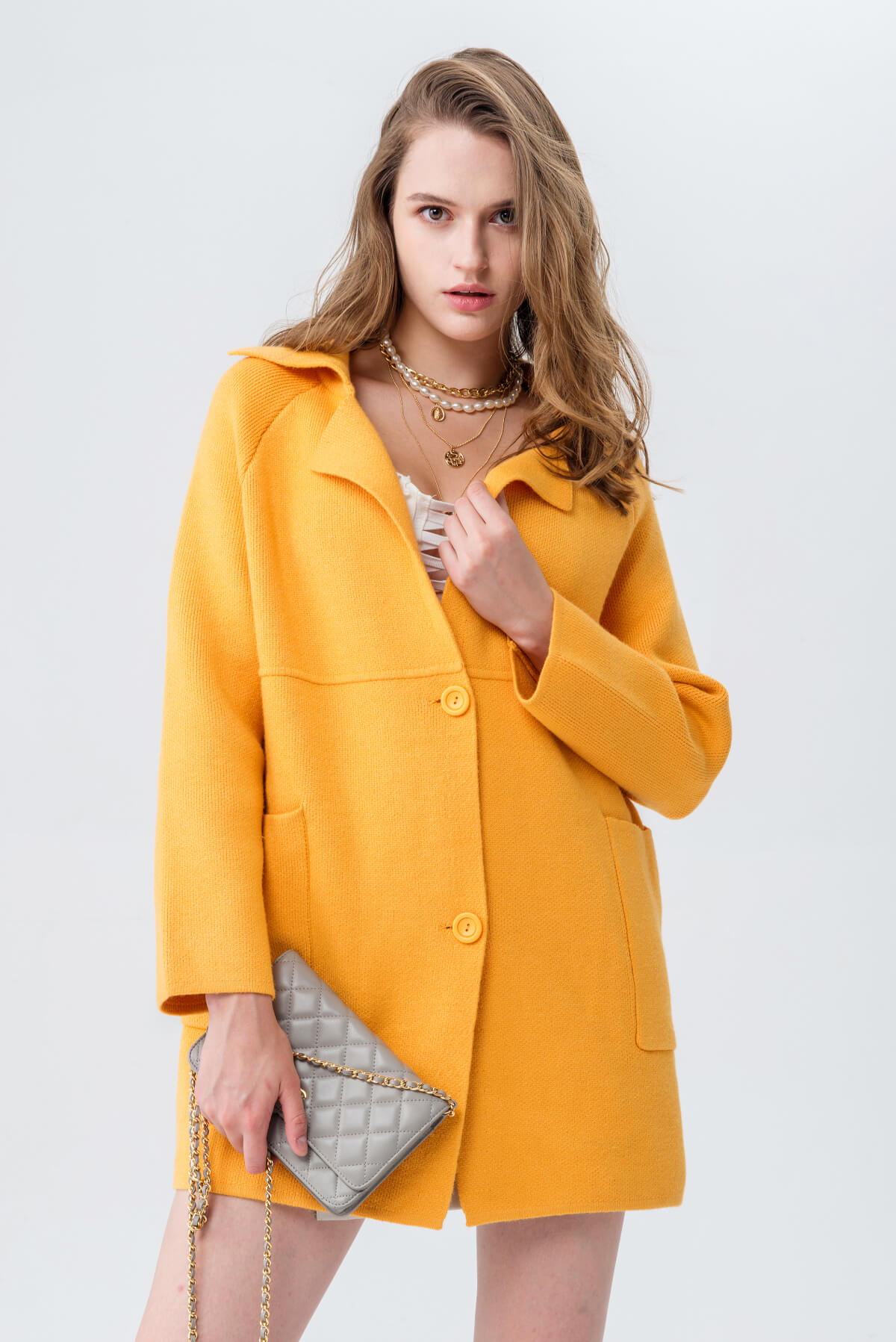
When drafting a knitwear tech pack, sleeve geometry is often treated as a minor styling note. In production, that seam dictates how a sweater sits across the collarbone, how freely arms move, and how technicians navigate panel assembly. The choice between a diagonal raglan and a contoured set-in sleeve applies whether panels are fully fashioned or cut-and-sew. Understanding their mechanical differences allows design teams to balance fit, silhouette, and workshop efficiency.
1. The Shoulder Line Is a Design Decision
The divide between raglan and set-in sleeves rests in how each treats the shoulder point. Every upper garment transitions fabric from neck to arm, but seam placement alters the silhouette and visual weight.
A raglan sleeve extends to the collar, joining front and back panels along diagonal seams from neckline to underarm. Skipping past the shoulder point creates a sloped line that softens the upper torso. In contrast, a set-in sleeve terminates at the shoulder point and drops into a curved armhole scye. A contoured sleeve cap joins this opening, establishing a crisp boundary that gives the garment tailored architecture.
2. Raglan: Mobility and a Soft Shoulder
The diagonal cut of a raglan sleeve distributes tension across the chest rather than anchoring it to a single shoulder pivot.
Mobility and comfort: Without a seam circling the armhole, the sleeve moves freely during wear. Raising the arms causes minimal hem pull, making raglan construction well suited to relaxed crewnecks and casual knits.
Flexible sizing: Set-in shoulders look awkward if the seam misses the shoulder point. Raglan cuts bypass this challenge because no seam sits on the shoulder point, letting one size drape cleanly across varied body widths.
Graphic continuity: Raglan seams offer a natural line for color blocking. When panels feature visible fashioning marks, those angled stitches become a deliberate textural accent tracing toward the collar.
3. Set-in: Tailoring and the True Shoulder
Set-in sleeves remain the benchmark for tailored clarity in knitwear. When a collection calls for crisp proportions, the set-in cut delivers a definition a sloped raglan line does not aim for.
Tailored definition: Anchoring the seam at the shoulder crest separates sleeve from torso. This separation keeps the body flat while the sleeve falls straight, creating a refined silhouette suited to fine-gauge pullovers and cardigans.
Sleeve cap balance: A set-in sleeve requires aligning the sleeve cap curve with the armhole scye. If the sleeve cap is too shallow, movement feels tight; if too tall, excess fabric bunches in the underarm when arms rest.

Precision alignment: Assembling a set-in sleeve demands exact alignment at the shoulder seam and underarm base to keep the sleeve hanging plumb without twisting.
4. What Each Sleeve Asks of the Workshop
Production feasibility does not reduce to declaring one pattern simpler. Rather, each sleeve construction concentrates operator effort at a different assembly stage.
Diagonal seam linking: Joining a raglan sleeve follows diagonal passes from underarm to collar. Continuous seams simplify panel alignment, but the diagonal seam line requires steady tension control during linking so seams do not ripple or stretch unevenly.
Curved armhole linking: Assembling a set-in sleeve requires navigating a curved armhole seam. Dial linking along this curve is a key step in our partner workshops' seven-step process, requiring loop-to-loop matching to keep the armhole flat without puckering.
Sampling checks: Because knit panels relax after finishing, both styles require verification during sampling. Technicians inspect prototypes to evaluate armhole fit, check seam flexibility under movement, and confirm dimensions hold stable through washing.
5. Matching the Sleeve to the Style
Relaxed silhouettes: Choose raglan sleeves for casual pullovers, color-blocked styles, and chunky knits where easy arm mobility and a sloping shoulder line complement an effortless aesthetic.
Structured silhouettes: Choose set-in sleeves for tailored office knits, fine-gauge crewnecks, and fitted cardigans where crisp lines and an intentional shoulder break project polish.

In our live catalog of 25 women's knitwear styles, spanning crewneck pullovers and cardigans, classic set-in shoulders anchor our tailored silhouettes. Since 2018, our Guangzhou team has supported European and North American brands with OEM and ODM knitwear development, and the partner workshops we work with run flat machines from 3GG to 14GG across both sloping raglan joints and contoured set-in armholes.
We support brand collections with minimum order quantities of 50 pieces per color per style, alongside sampling in 5-7 days, letting teams evaluate shoulder drape before bulk production. Quotes and designs remain confidential, backed by pre-shipment inspection reports. Contact our team to review your tech pack and select the right shoulder construction for your upcoming collection.