Oct 27, 2026Buying Guides
Sweater Weight Explained: Grams and Garment Decisions
Learn how sweater weight in grams guides garment drape, fit, and seasonality. Explore live weight benchmarks and verify target specs during sample rounds.

When developing knitwear collections, brand teams often rely on subjective terms like cozy or chunky. When the first prototype arrives, the garment frequently feels too heavy or too light for its target season. In woven apparel, designers track fabric weight in grams per square meter, but knitwear requires evaluating total garment weight in grams per piece to set an objective specification before production begins.
1. Garment Weight Is a Spec, Not a Feel
In fabric sourcing, buyers use grams per square meter to compare textile rolls. Woven production leans on roll-based yardage weights, but a sweater combines panels, trims, and collars knitted with distinct tensions. Single area measurements cannot capture total garment mass.
Total weight in grams provides the true baseline for knitwear. Treating weight as a tech pack metric gives technicians a clear benchmark during knitting and finishing. Anchoring styles to verified gram targets avoids surprises and establishes repeatable standards across production runs.
2. What the Gram Number Actually Drives
Seasonality and climate targeting: The gram number defines where a sweater fits in retail calendars. Lighter styles provide breathable layers for spring transitions, while heavier builds anchor cold-weather deliveries. Early gram targets align collections with realistic climate demands.
Drape, structure, and layering: Weight dictates how fabric hangs on the body. Lighter builds drape softly, whereas denser weights supply architectural structure. Calibrated weight also supports layering comfort, so pieces fit smoothly under tailored coats without crowding the shoulders.
Perceived bulk versus real weight: Visual volume does not always equal physical mass. A lofty open stitch can look bulky while remaining light, whereas compact jersey carries substantial mass in a slim profile. While finer gauges tend toward lighter fabric, density governs total weight.

3. A Live Range, From 165 to 592 Grams
Across the 25 styles in our live collection, garment weight spans from roughly 165 to 592 grams, showing how silhouette, fiber, and stitch structure establish real garment mass across seasons.
Warm-weather crochet inspiration at 165 grams: At the lightest end, an open crochet-inspired top in viscose weighs roughly 165 grams, providing generous airflow and an effortless feel for warm-weather layering.
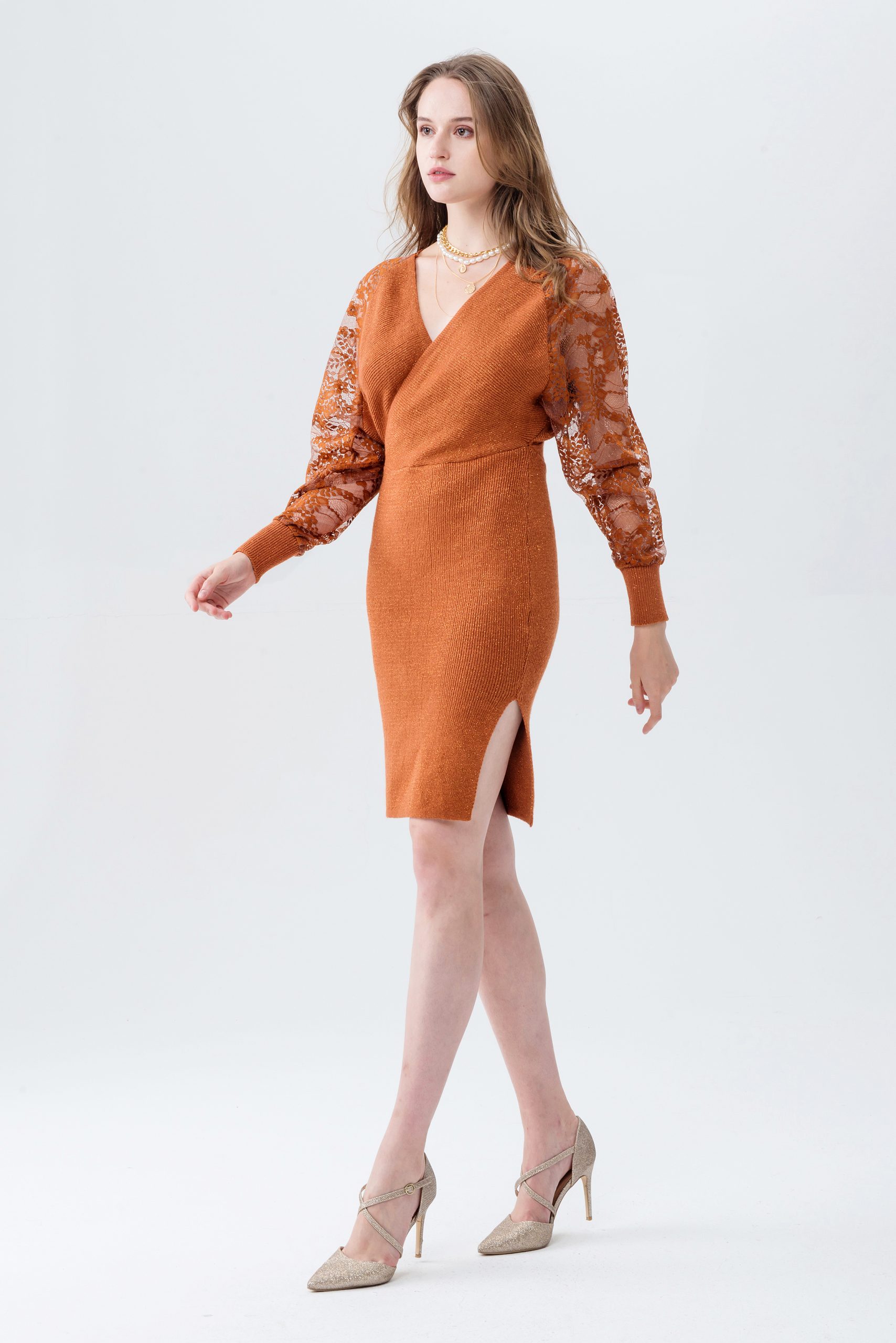
Transitional mid-weights from 200 to 260 grams: In the mid-weight tier, a 200-gram mixed-panel top and a 257-gram pullover with cut-and-sew sleeves balance drape and structure. Upward in coverage, a knit dress reaches roughly 359 grams.
Substantial winter warmth from 380 to 592 grams: For cold conditions, a 380-gram turtleneck in an acrylic-nylon-elastane blend provides dense cold-weather warmth, while a 592-gram turtleneck relies on a heavily plied yarn construction for a heavy, sculpted winter silhouette.

4. Setting a Target Weight for Your Style
Defining a target range: If your brief calls for a mid-weight layering piece, a 250 to 350 gram target gives the workshop a clear bullseye. A target range gives technicians the operational flexibility to balance stitch tension without altering your silhouette.
Accounting for size grading: Total weight naturally scales upward across sizing, as an XL requires more knitted area than an XS. Tech packs should define the target weight on the base sample size, typically a Medium, alongside a tolerance allowance of several grams.
Anticipating wet processing shifts: Knitted panels change mass between coming off the machine bed and final packing. Washing and steam pressing relax internal loop tension and shift moisture content. Because yarn consumption is the main material cost in any sweater, locking the finished-weight target early keeps both budgeting and specs honest.
5. How Weight Decisions Get Verified in Sampling
Direct baseline weighing: Prototype verification begins on a calibrated scale once the first sample completes pressing. Technicians measure the base size against tech pack parameters, checking whether the finished piece lands inside the weight tolerance.
Post-wash stability checks: Evaluating samples after laundering confirms how fibers settle. Knits may tighten after wash, altering the weight-to-drape balance. Checking washed samples shows whether the piece retains its intended hand feel, body length, and fabric density.
At Imorna, our partner workshops run 3GG, 7GG, 12GG, and 14GG flat knitting machines, pairing technical development with sample weighing across every silhouette. We support emerging labels and established brands with minimum order quantities from 50 pieces per color per style, alongside prototype sampling in 5 to 7 days. If you are refining target weights for an upcoming collection, contact our team to review your technical brief and plan your initial sample.